Recall · next year's work books itself
Recall that reminds each customer once a month, not once per instrument
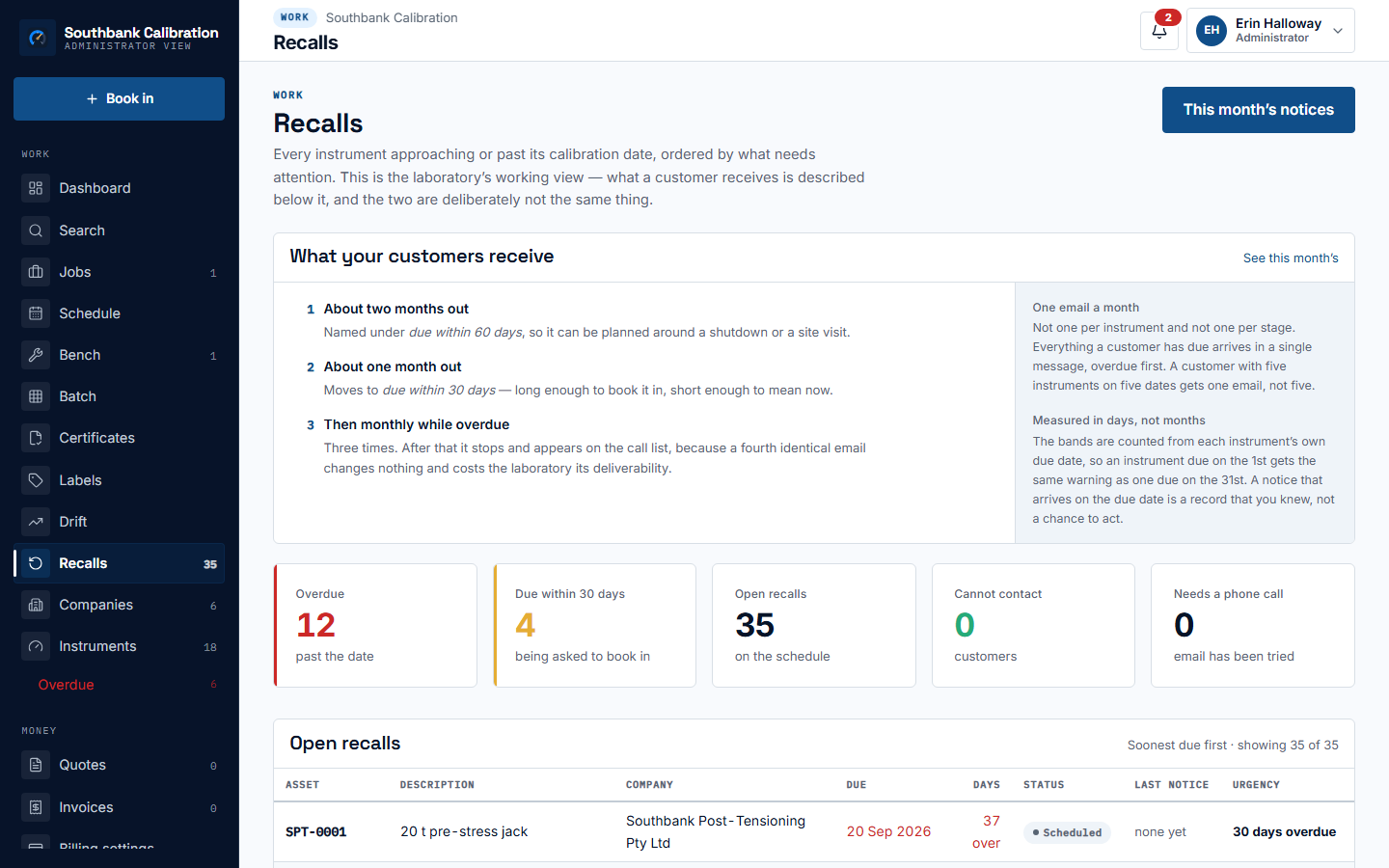
How it decides
Days from the instrument's own due date, never the calendar.
A recall measured in calendar months is decided by the calendar: an instrument due on the first of the month got one warning and then a notice on the morning it expired. These bands count days from each instrument's date, so every instrument gets the same warning wherever in the month it falls.
Two months out
The instrument appears under due within 60 days in the customer's next monthly email, early enough to plan around a shutdown or a site visit.
One month out
It moves to due within 30 days: long enough to book in, short enough to mean now. The same band colours the register, the instrument's page and the customer portal, so amber means the same thing everywhere.
Then monthly while overdue, three times
After that it stops, because a fourth identical email changes nothing and costs the laboratory its deliverability. The instrument goes on the call list with the date of the last notice, which is where a telephone does what email could not.
Never to an address nobody has confirmed
A contact's address is marked checked when a customer reads it out, writes from it or puts it on a purchase order. Unconfirmed addresses are not written to. The unreachable list is real work, and it only closes by asking.
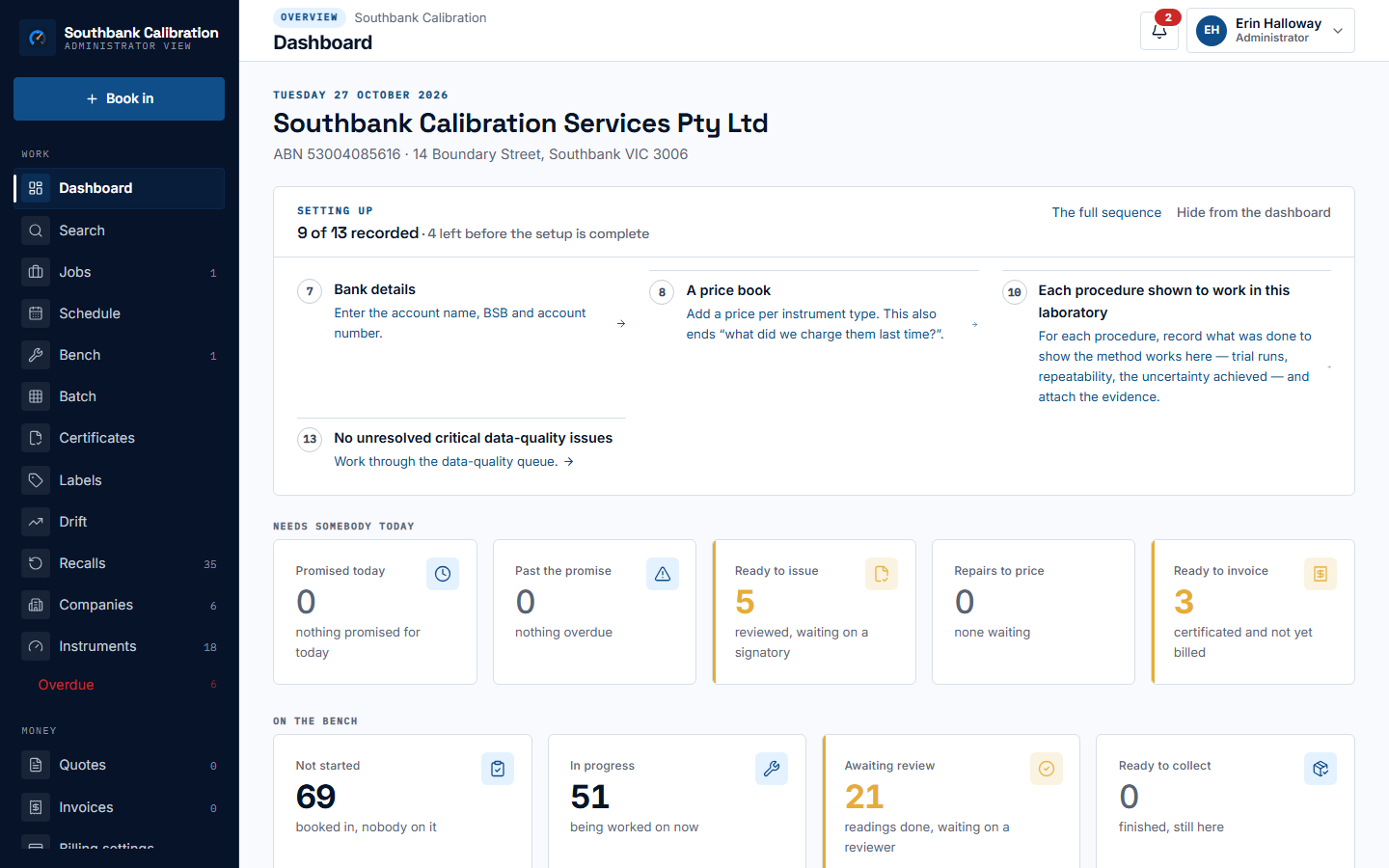
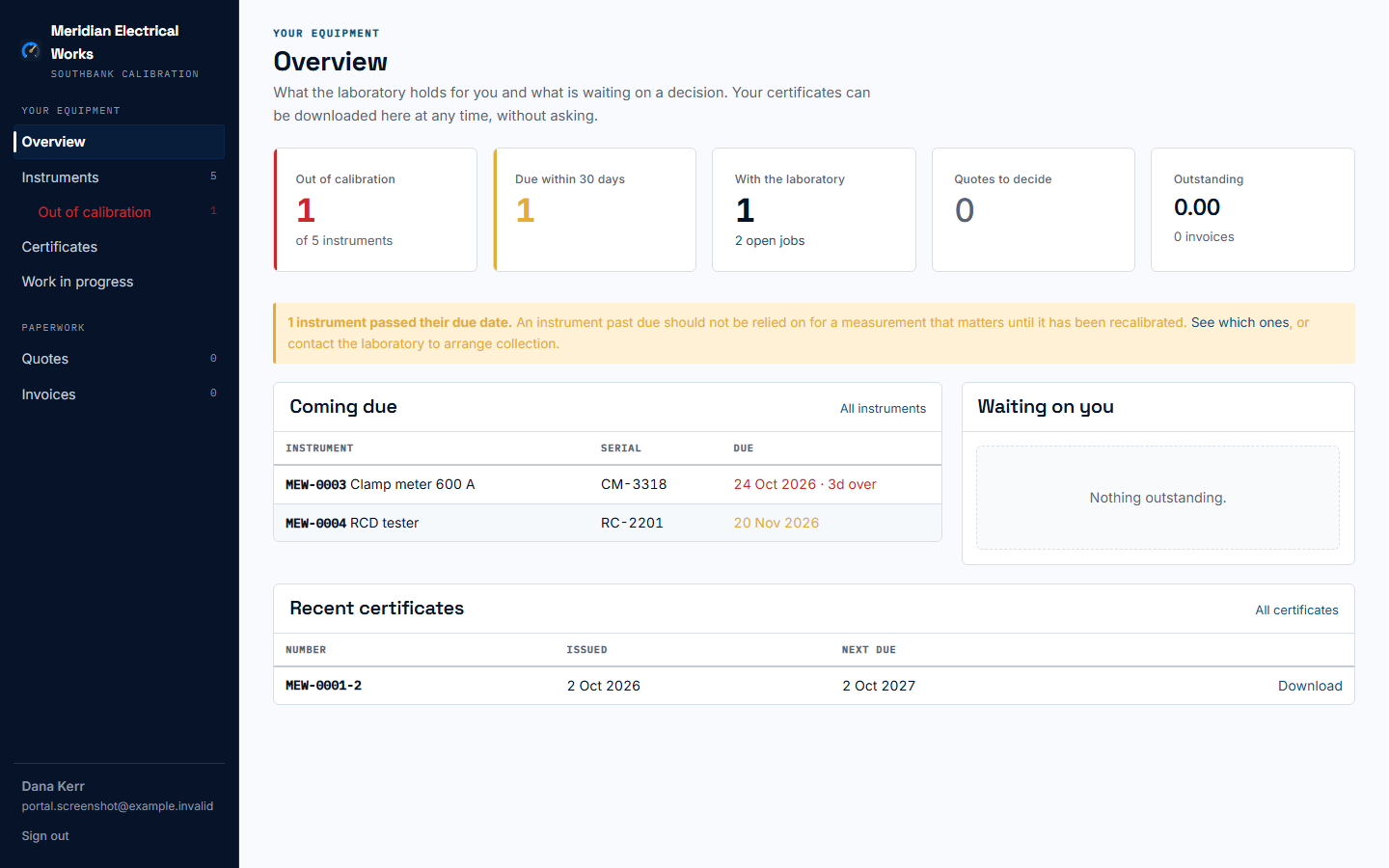
Scheduling the work that comes back
A recall that lands becomes a booking at the counter: one job per delivery, the instruments already known, the last sheet's layout offered on the bench so the same points are measured as last year. The reference standards have their own recall pointed inwards, starting ninety days ahead and never stopping, because an overdue master has nobody else to chase it and the database refuses to calibrate against one.
What it does not do
It does not print a recommended interval on the certificate unless the customer agreed one, it does not send a notice on the due date itself, and it does not send a seventh reminder. Each of those was tried, by other systems, and each trains customers to stop reading.
CalibraWorks recall derives due dates from each instrument's interval, emails each customer once a month with everything due within sixty days or overdue, stops after three overdue notices and hands the rest to a call list, and never writes to an address nobody has confirmed.
Questions about recall
- How often does a customer hear from us?
- Once a month at most, and only when something is due or overdue. One email lists everything for that customer, overdue first. A customer with five instruments on five dates gets one message, not five. After three monthly overdue notices it stops and the instrument appears on the laboratory's call list.
- Can we turn it off, or run it by hand?
- Both. The nightly sweep can be switched off and the same digest sent by hand from the recalls screen, for a laboratory that wants to look before anything goes out. The two paths send the identical message, so switching to autopilot later changes nothing a customer sees.
- What if we have no email address for a customer?
- Nothing is sent and the laboratory is told. The recalls screen counts customers that cannot be contacted and the unreachable list is the chase list, ordered by what falls due soonest. An address nobody has confirmed is not written to either, because a run of bounces damages the laboratory's ability to reach everybody.
- Does it recommend an interval on the certificate?
- Only where the customer has agreed one. ISO/IEC 17025 §7.8.4.3 forbids a recommendation on the calibration interval otherwise. The interval is set per instrument type and per customer, the due date is derived from it, and the recall runs from the due date.
Start free. Thirty days, everything included.
No card, and one trial per organisation. Nothing is deleted when a trial ends — the records are yours and stay readable and exportable.